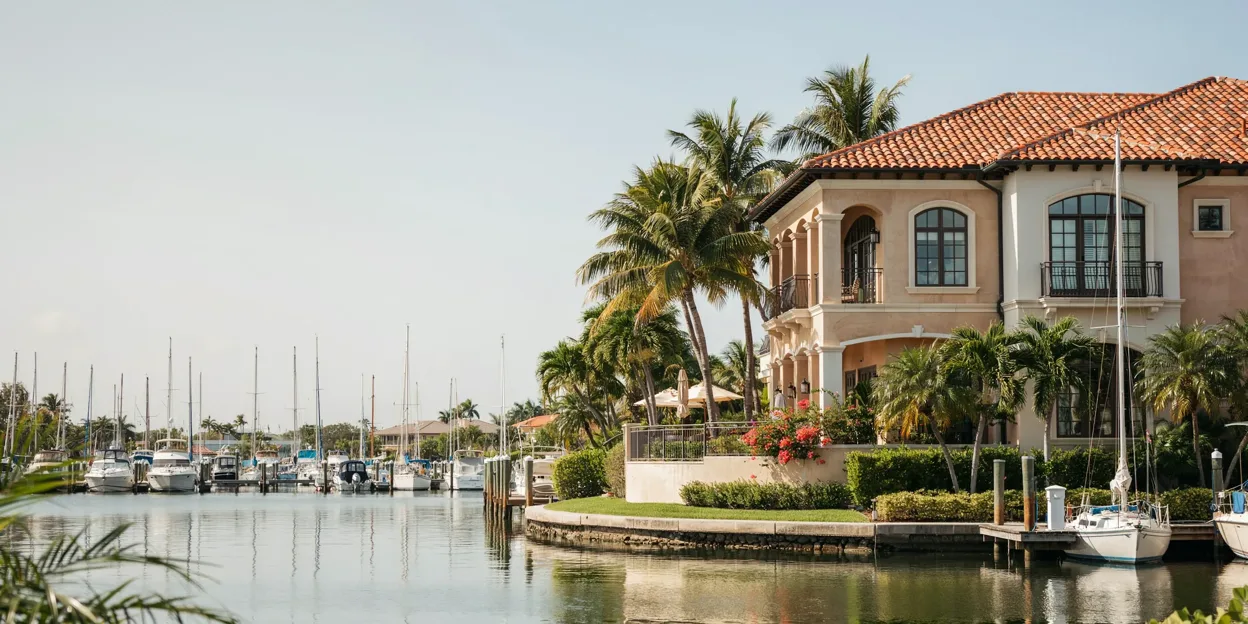
Melbourne grew up around Crane Creek and the railroad, then grew fast when the Cape started hiring in the 1950s. The housing follows that timeline: 1920s and 30s cottages near downtown, block ranches from the 1950s and 60s across the neighborhoods between US 1 and Babcock Street, 1970s and 80s homes around Lake Washington and the airport, and newer subdivisions wherever land was left. Most of the older houses are single-story concrete block on a slab with a low-pitch truss roof, and most carry architectural shingle today, with metal spreading on the streets nearest the lagoon.
The 2004 pair of Frances and Jeanne, three weeks apart, put tarps on a large share of those block ranches and pulled many of them off again. Irma in September 2017 damaged more than 7,000 homes in the county. The roofs that went on after each storm are now 8 to 22 years old, and the insurer's roof-age letters arrive in Melbourne in the same waves the roofs went on.
Call this site and you are connected with an independent roofing contractor who works the city. The contractor evaluates the roof and explains what it needs.
The most common call from a Melbourne address is a renewal letter on a shingle roof that went on after Jeanne, which is a roof inspection with a written report and sometimes a roof replacement after it. The second is a drip at a pipe boot or a valley after a summer storm, which is a roof repair. A 1960s block house on its third roof is a good candidate for the deck re-nailing and straps that a wind mitigation form rewards.
Re-roofs inside the city limits are permitted through the City of Melbourne Building Section at City Hall on East Strawbridge Avenue, not through the county. The neighborhoods south of NASA Boulevard sit under the approach to Melbourne Orlando International Airport, whose aerospace tenants along the runway employ a large share of the engineers who own those roofs.
Call (321) 490-1097 to be connected with a local roofing contractor serving Melbourne.
A lifted shingle, a rusted pipe boot, a valley that drips in every afternoon storm, or salt-eaten flashing on a beachside roof, found and fixed.
Tear-off to the deck, re-nailing, sealed underlayment, and a new shingle or metal roof permitted through the right city or county desk.
Tarping, photos, and repair after wind, a tornado band, or a named storm lifts shingles or peels panels off a Brevard roof.
A walk on the roof and a look in the attic, written up with photos for a renewal letter, a closing, or a check before June 1.
Standing-seam and exposed-fastener metal for Space Coast homes, with the coastal-grade fasteners and trim the beachside needs.
The state OIR-B1-1802 form that records deck nailing, roof-to-wall straps, and roof shape so your insurer prices the wind risk correctly.
What to photograph, what a written roofing scope gives your adjuster, and how Florida's claim deadlines and roof-age rules work.